

As 2025 came to a close, many Americans took stock of their daily habits and the factors that influence long-term health. Research continues to show that behaviors related to nutrition, physical activity, sleep, stress management and social engagement play an important role in preventing illness and improving quality of life. To better understand how Americans are approaching these issues, I invited readers to participate in a brief holiday poll. Here are the results:
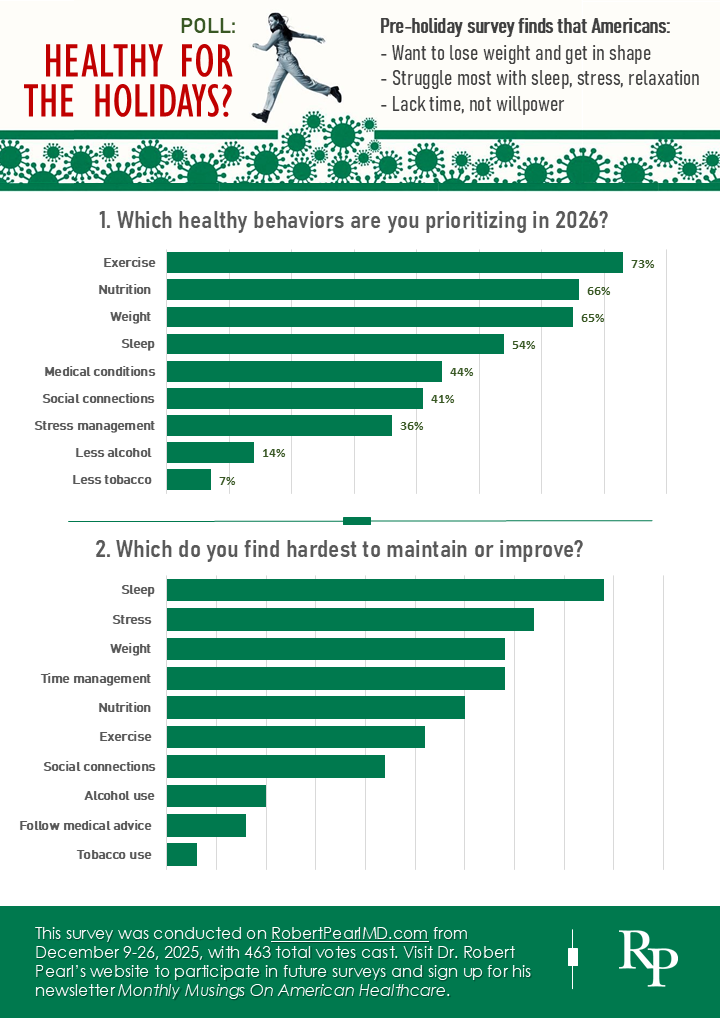
MY THOUGHTS: If readers follow through on their stated priorities in 2026, I’m optimistic they will be healthier in December than they are today. Decades of research show that physical activity, improved nutrition, weight management and adequate sleep are strongly associated with longer life expectancy and better quality of life.
But the responses to the second question point to a deeper concern. Many of the behaviors that most strongly support physical and emotional well-being may be harder to access in the year ahead. Adequate sleep, personal relaxation and meaningful time with loved ones all require something increasingly scarce: time. And when time is limited, these activities are often the first to be sacrificed.
The irony is that these behaviors deliver major benefits. Sleep supports brain health by clearing metabolic waste. Chronic stress reduction lowers inflammation and disease risk. Social connection protects both mental and physical health.
When people fall short of their New Year’s intentions, the failure is often framed as a lack of discipline or willpower. The survey results suggest a different explanation. For many Americans, the primary constraint is not motivation. It’s simply time. Based on this survey, that is likely to be our biggest challenge in the year to come.
Thank you for providing this platform. As a retired nurse and the widow of Dennis Mills, I have wanted to maintain some connection with the medical field. This has allowed me to do that.