

Generative AI tools like ChatGPT, Gemini and Claude are increasingly being used for health and medical questions, from understanding symptoms to preparing for doctor visits. Last month, I wanted to see how usage, trust and experience with AI are changing. Here are the results:
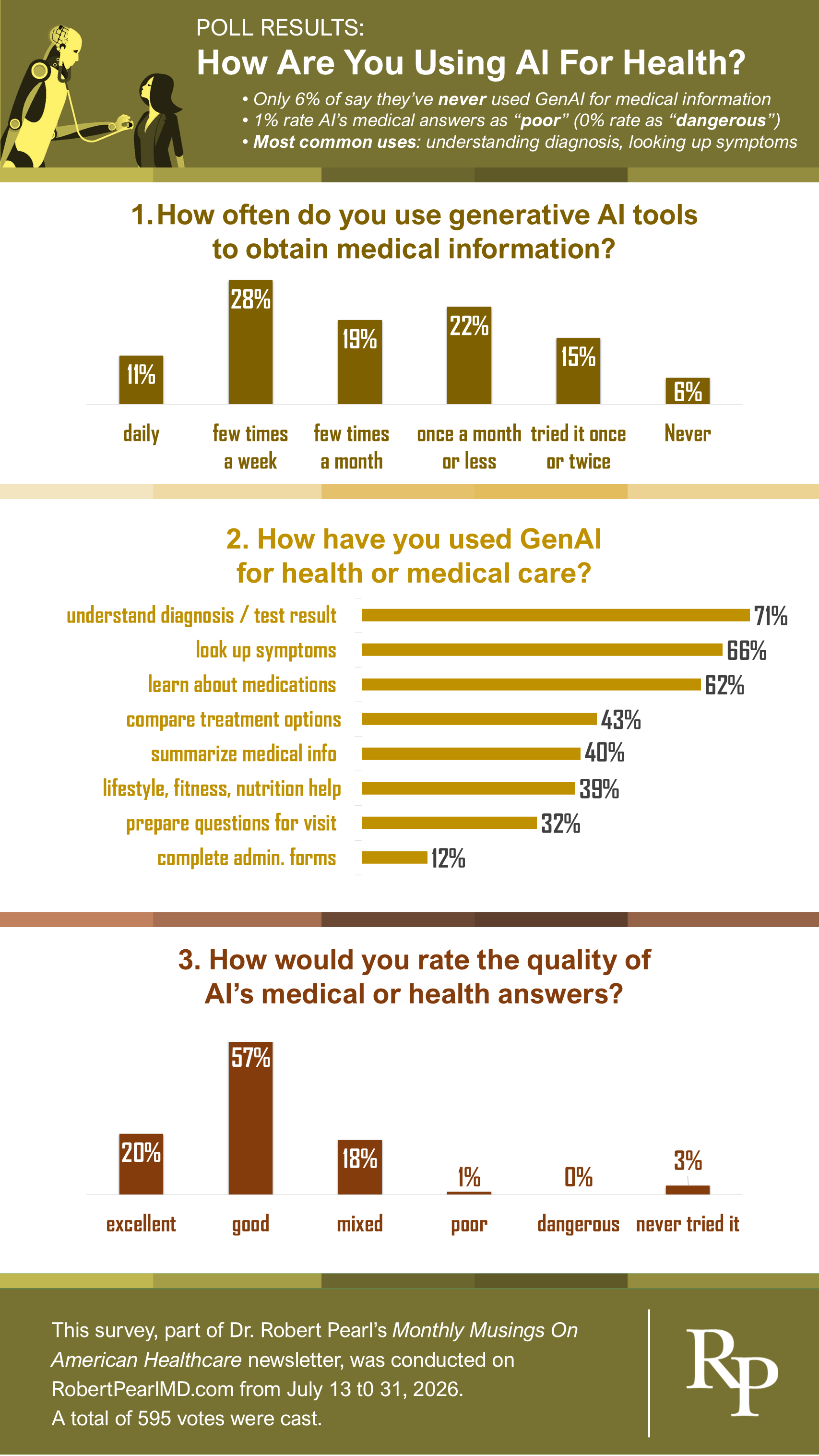
My thoughts: When I wrote ChatGPT, MD a little over two years ago, most physicians were skeptical that large language models would ever become an important source of medical information or clinical guidance. Since then, patient behavior has changed quickly. This survey shows how invested people are in GenAI for medical assistance.
Only 6% of respondents said they’ve never used GenAI for medical information. A majority use it at least a few times a month, and nearly 4 in 10 use it weekly or daily. Consider this: even patients with multiple chronic diseases will see their doctor only every few months, if that often.
But we know from this data that medical questions arise far more frequently than medical appointments.
Readers are asking GenAI to explain diagnoses, medication side-effects and test results. They are using it to provide expertise on new symptoms and compare treatment options. These are areas where patients have traditionally relied almost exclusively on clinicians for explanation and guidance.
The satisfaction numbers are equally important. Seventy-seven percent rated the answers as excellent or good, while only 1% rated them poor (none called them “dangerous”). As these tools improve — doubling in expertise annually by most estimates — it is hard to imagine that patients will not increasingly ask GenAI about new clinical problems and chronic medical conditions before, between or sometimes instead of office visits.
I believe the better path is for patients to use these tools with the encouragement and guidance of their physicians, and with rapid access to care when GenAI identifies a serious problem. But whether clinicians support greater patient empowerment or try to resist it, the trend is clear. Patients will increasingly use GenAI for health advice. The only question is whether medicine will help guide that use or watch it happen outside the exam room.
Thanks to all who voted! To participate in future surveys, and for access to timely news and opinion on American healthcare, sign up for my free (and ad-free) newsletter Monthly Musings on American Healthcare.
Open Evidence should be used by physicians. It is superior to the other three mentioned. (I have no personal or financial interest in Open Evidence)