

A recent Controversies in Medicine video examined Medical Aid in Dying, the subject of one of the most difficult and personal debates in healthcare. Last month’s reader poll asked for your views on this topic. Here are the results with my analysis below the graphic:
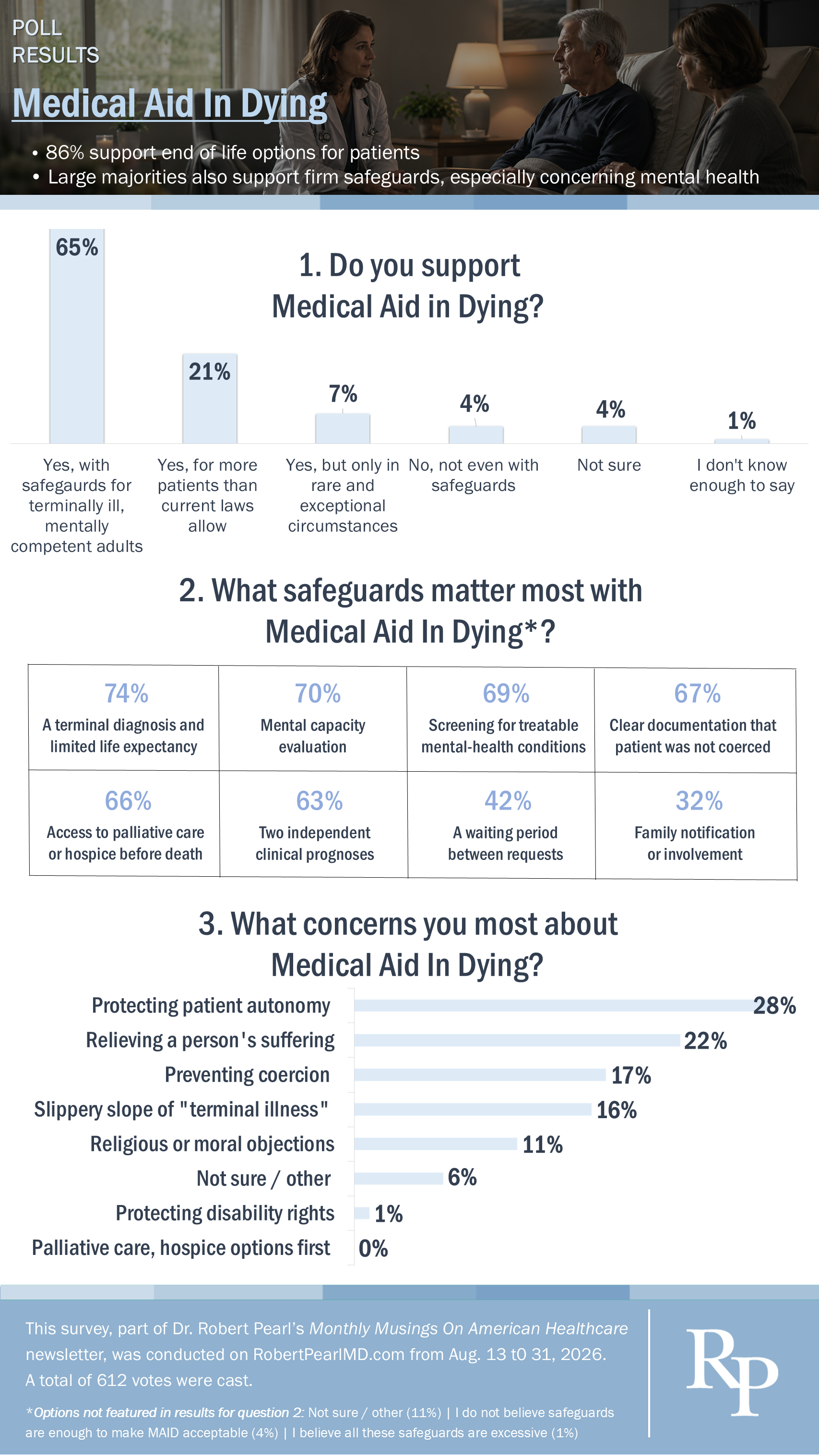
My thoughts: The most striking result is that 86% of readers support Medical Aid in Dying in some form. To me, that represents an important shift in how people think about medicine’s role at the end of life. For generations, doctors were trained to save a life at any cost. When death is near and the pain is unbearable, relief from suffering matters more than adding days or weeks the patient does not want.
At the same time, most readers support firm safeguards, especially when it comes to issue of mental health. Large majorities favor mental-capacity evaluations, screening for treatable mental-health conditions and documentation against coercion.
Taken together, the survey shows most respondents favor a middle path: preserving patient autonomy while protecting vulnerable populations from abuse or pressure.
Unfortunately, for many individuals with terminal illness and severe pain, that path remains blocked by state law, institutional policy or medical practice. The first step toward compassionate care is telling patients the truth about their disease and what the future is likely to hold. The next step is listening to what they want.
Thanks to all who voted! To participate in future surveys, and for access to timely news and opinion on American healthcare, sign up for my free (and ad-free) newsletter Monthly Musings on American Healthcare.
Something missing from the survey that needs to be considered along with the questions presented is the influence of religious beliefs. Making a decisition for assisted suicide, which is what this is, goes against some core religious beliefs that we should not end our own lives regardless of the circumstances. Weighing that along with the questions above makes this a much more complex issue.