

Lowering drug prices, reversing chronic disease and expanding access to generative AI are among the many healthcare promises made by the current administration. But last month I asked readers which of these goals is most achievable, and what’s most likely to stand in the way? Here are the results:
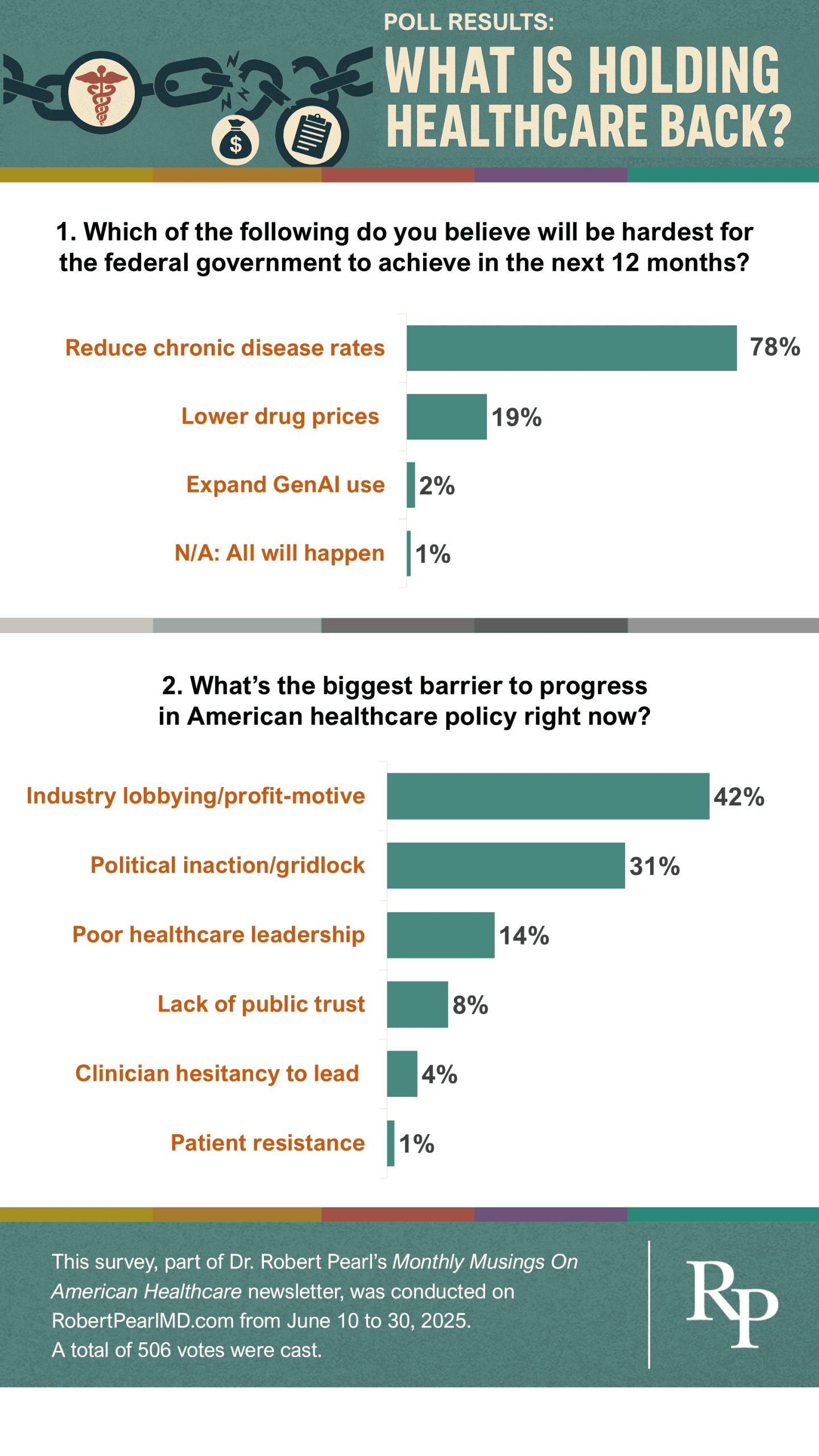
MY THOUGHTS: Most of the survey responses align with the current state of American medicine. Chronic disease remains a massive challenge. Changing people’s diets, increasing physical activity and promoting preventive care are all difficult goals, especially within a 12-month window.
Similarly, healthcare is one of the most change-resistant industries. Lobbying power, campaign contributions and political gridlock continue to limit the pace of reform.
What surprised me most was how few respondents identified clinician hesitancy as a major barrier. It’s not that I don’t understand the challenges of leading change, but I see far too few physicians stepping forward to try. Instead, many are selling their practices to hospitals or turning to private equity for funding, despite the poor outcomes that often follow. Rather than gaining control, they’re ceding leadership to administrators and investors.
If clinicians don’t lead the way on generative AI, the system’s existing problems will only get worse. One thing’s certain: For-profit companies and private equity firms won’t put the well-being of patients or the satisfaction of the doctors who care for them high on their priority list.
