

In a recent Forbes article, I explored how clinicians might harness generative AI – not just for their own use or financial gain, but as a tool to educate and empower patients. So, I asked readers (both healthcare professionals and patients) whether they’re using GenAI now for medical purposes and whether they’d be open to a more collaborative approach going forward. Here are the results:
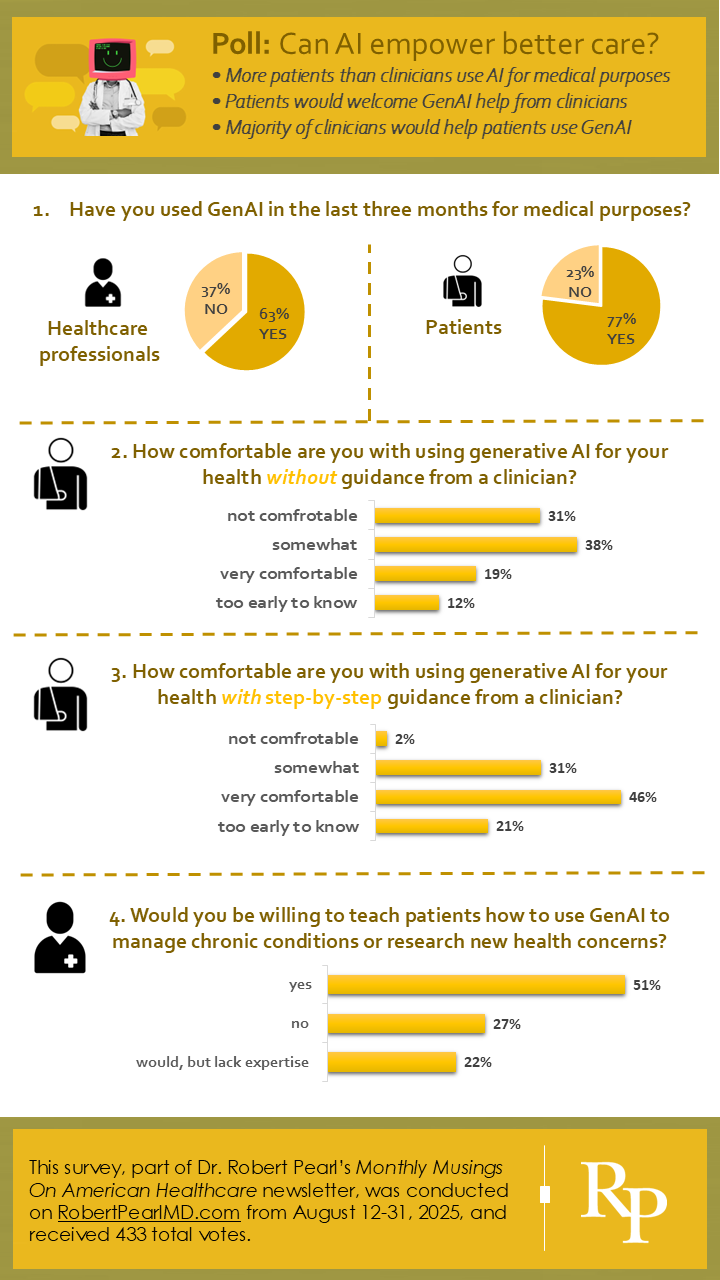
My thoughts: These results reflect how quickly perceptions of generative AI in medicine are shifting. A clear majority of patients and clinicians have already used these tools to look up medical information or assist in clinical decision-making, something that would have been unthinkable a year ago.
The biggest surprise? The wide gap in patient comfort depending on whether a trusted clinician provides guidance. Nearly 70% of patients say they’re at least somewhat comfortable managing medical issues with GenAI if they’re given step-by-step instructions from a doctor (compared to just 38% when going it alone). That’s a powerful signal that trust and confidence, not technology, are the biggest barriers to adoption.
Clinicians appear cautiously optimistic. While just over half say they’d be willing to help patients use GenAI in this way, a significant number don’t feel expert enough … yet.
Putting the pieces together, these trends suggest that the tools are ready, the patients are willing and the opportunity for collaborative, GenAI-assisted care is closer than many assume.
